Full-electric ball screw
Servo motors drive precision ball-screw mechanisms for responsive, oil-free ram motion in compact precision applications.
Press brake technology explained
A modern press brake is a coordinated system of force, motion, positioning, tooling and safety. This guide explains how the major functions work—and when advanced options add real production value.
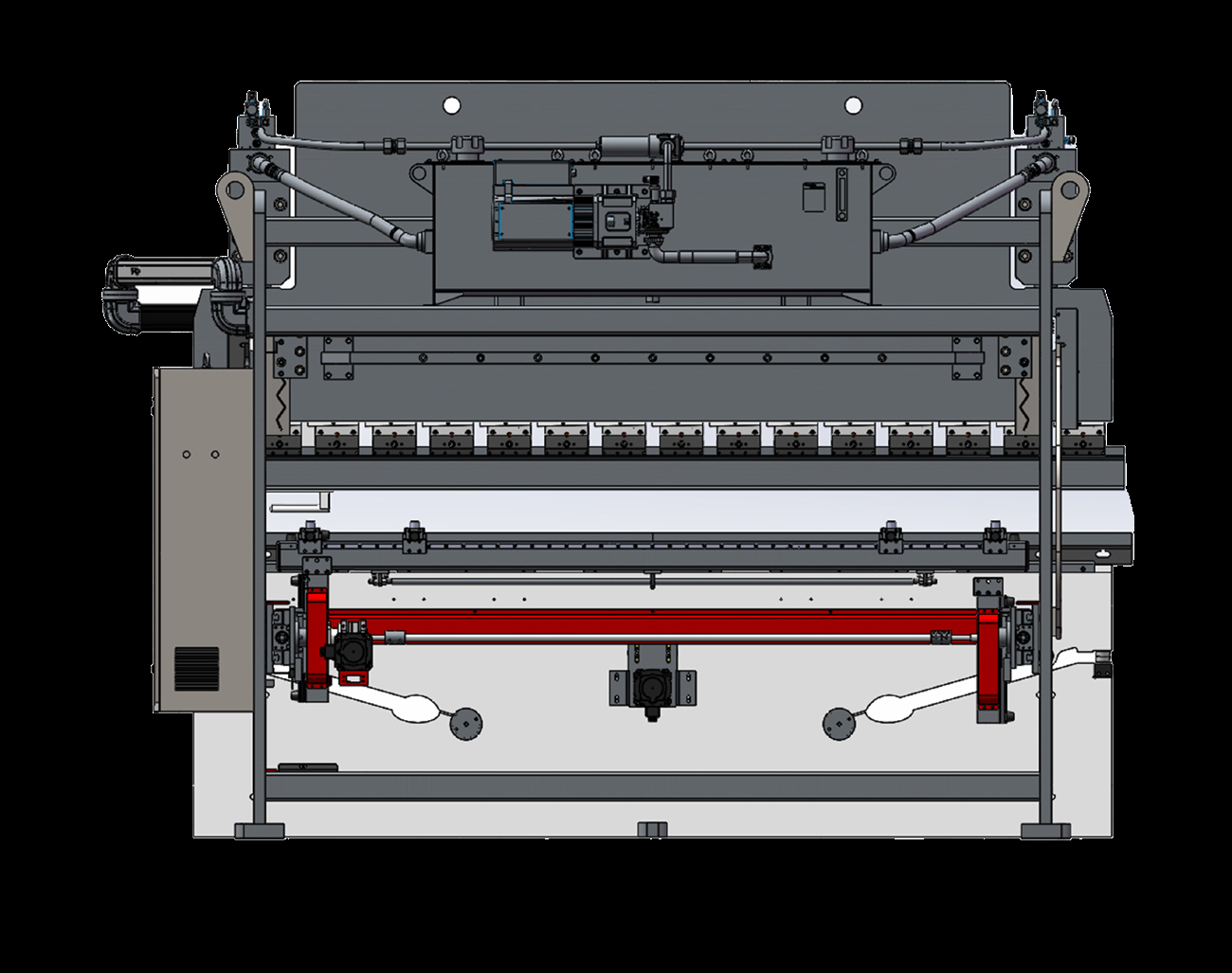
The bending cycle
The machine must position the sheet, apply controlled force and compensate for material behavior through every bend.
The CNC calculates bend sequence, ram depth, gauge position and corrections.
The backgauge moves the fingers to establish flange depth and part location.
The ram brings the punch into the die and applies the programmed bending force.
Crowning and angle systems correct machine and material deflection.
The control advances through the sequence with repeatable axis positions.
Drive & motion systems
The correct drive depends on force, working length, cycle speed, energy priorities and the intended production mix.
Servo motors drive precision ball-screw mechanisms for responsive, oil-free ram motion in compact precision applications.
A servo motor controls hydraulic delivery on demand, retaining hydraulic force while reducing unnecessary pump operation, heat and noise.
Application-matched valve- or pump-controlled hydraulics provide repeatable force across broad tonnage, daylight and working-length requirements.
CNC control
BENDRYX uses ESA S840 W as the standard control platform, with Delem DA-series options available by configuration.
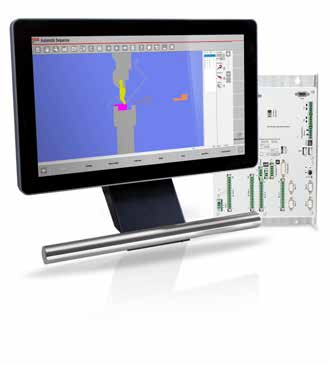
15.6-inch touchscreen and 2D part graphics. Explore the standard platform, optional sequencing and larger VIS-800 controls.
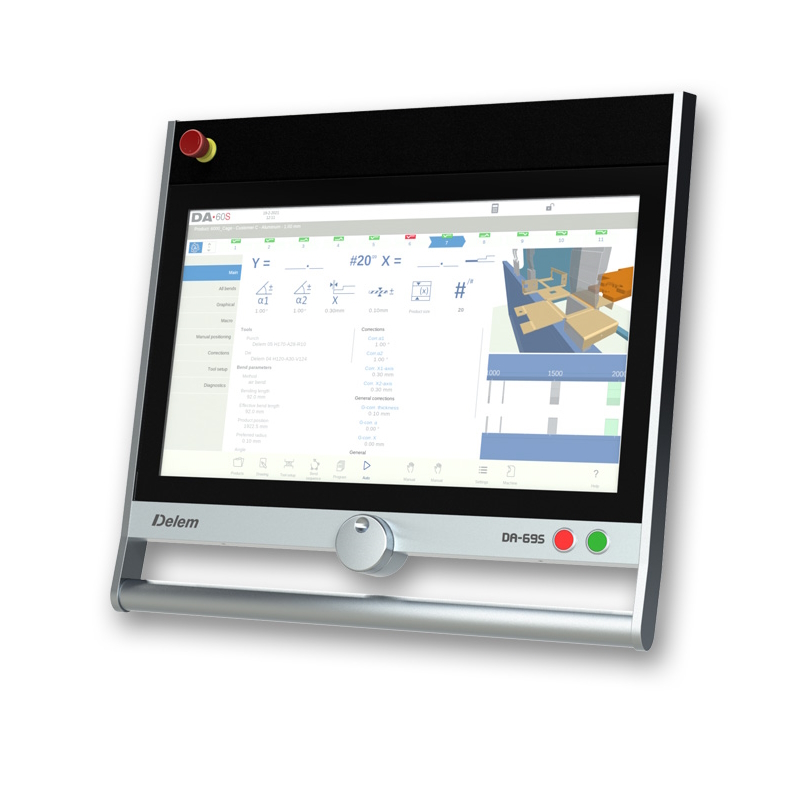
Compare DA-66S, DA-69S, DA-66T and DA-69T: 2D or 3D programming, simulation and offline preparation.
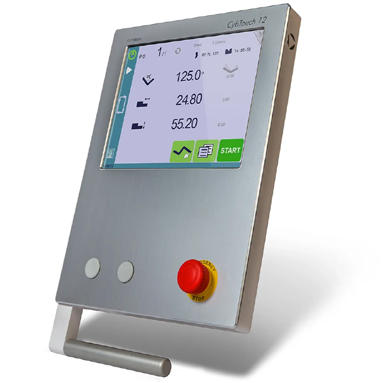
CybTouch and VisiTouch control families provide touchscreen bending workflows across application levels.
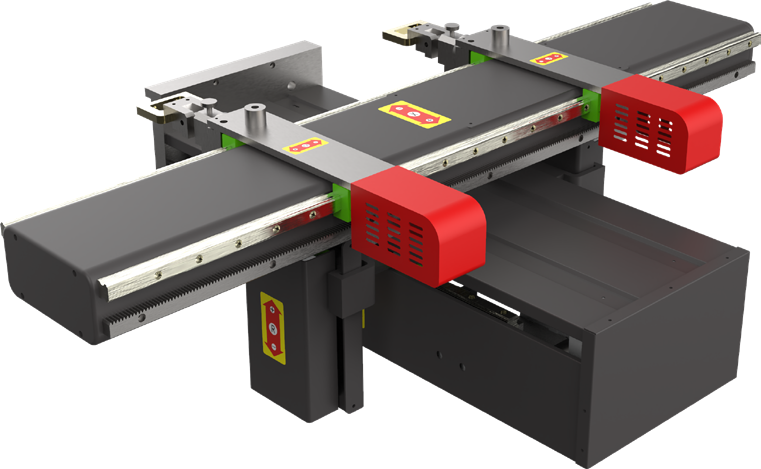
The CNC synchronizes Y1/Y2 ram motion with X, R, Z and other positioning axes in each bend step.
Angle accuracy
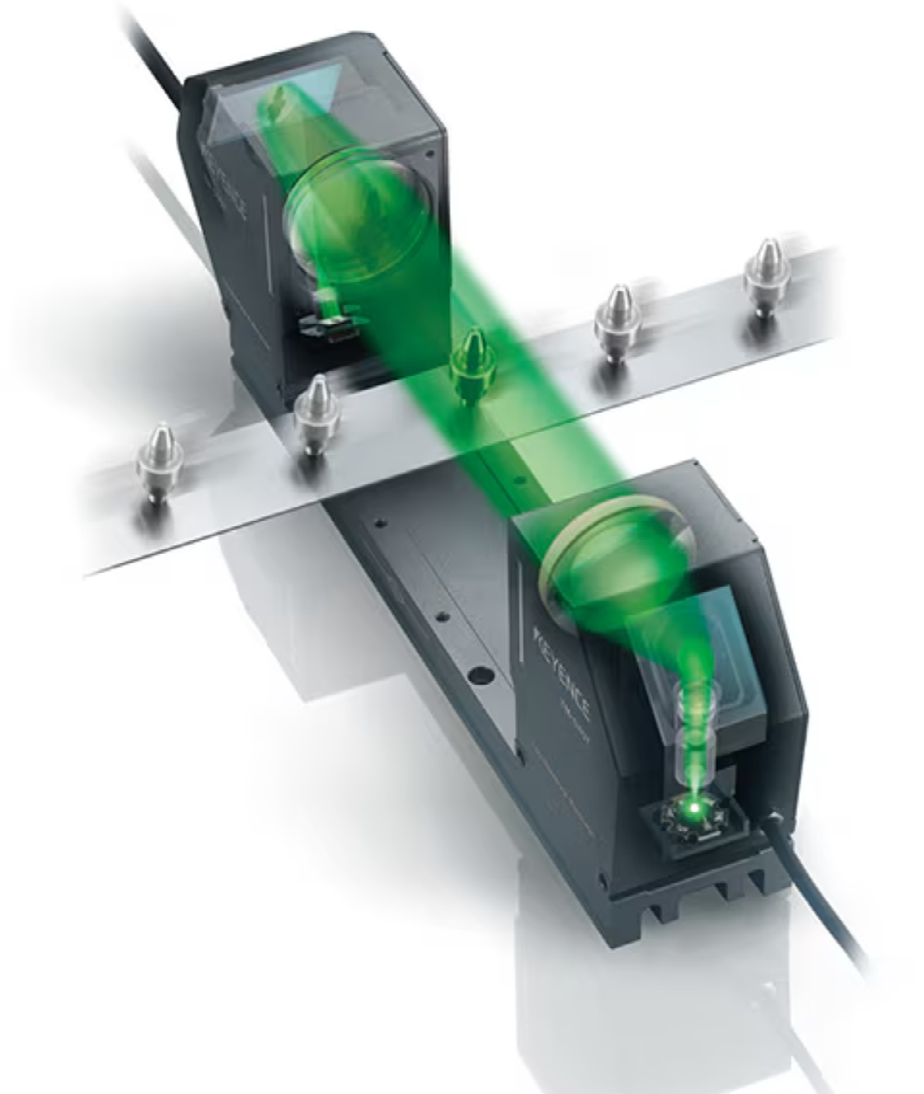
Thickness, grain direction, tensile strength and springback can change the resulting angle. Measurement and compensation options help the machine respond to those real-world variables.
Safety & automation
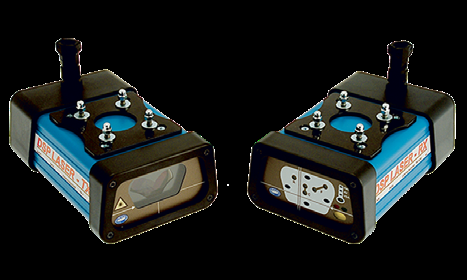
DSP laser guarding places a visible detection field near the punch to help protect the operator fingers fingers while supporting productive loading and bending workflows.
Automation and handling
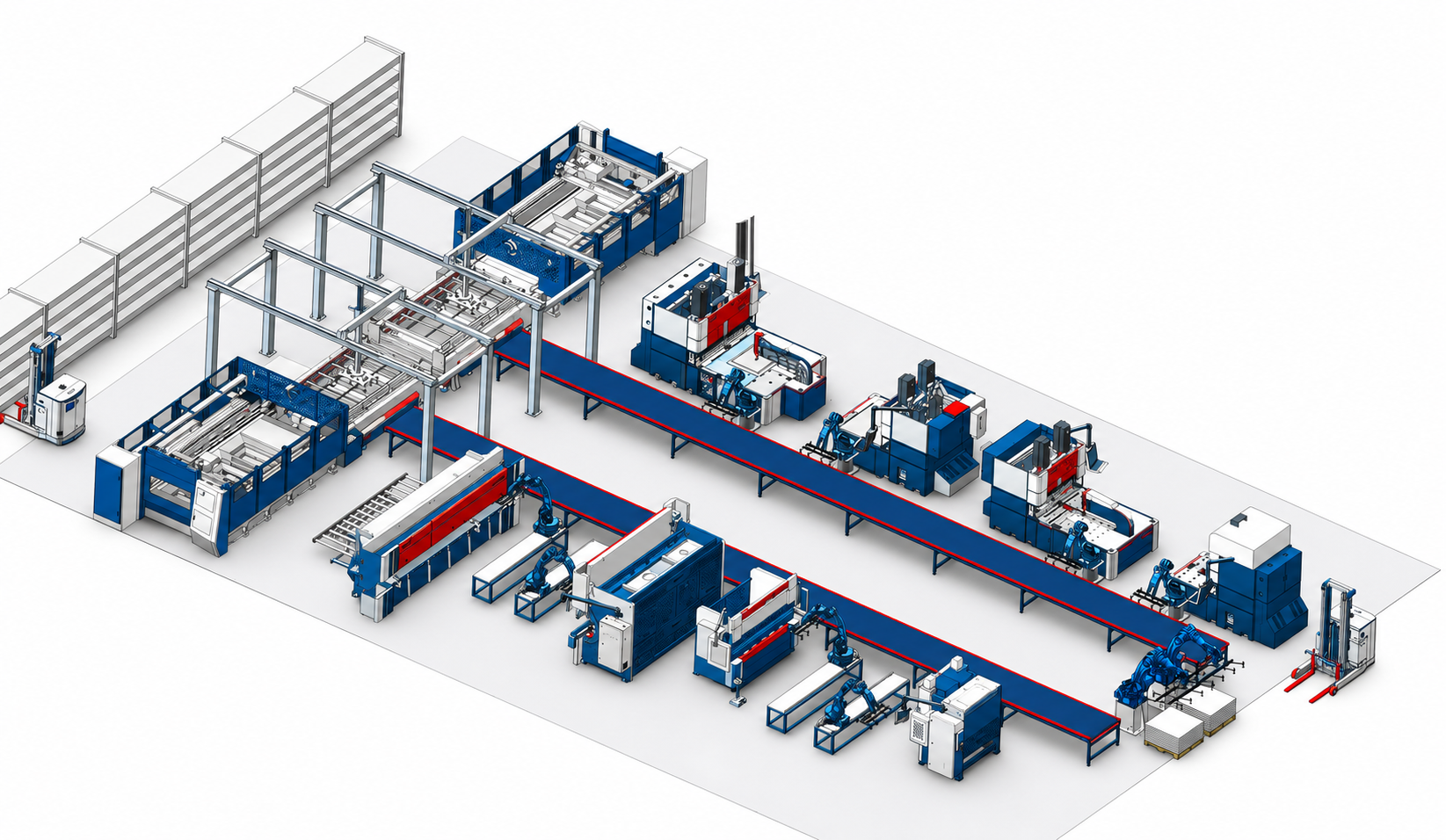
Sheet followers, robotic loading, automatic tool changes and connected production data can reduce handling effort and improve repeatability.
Continue learning