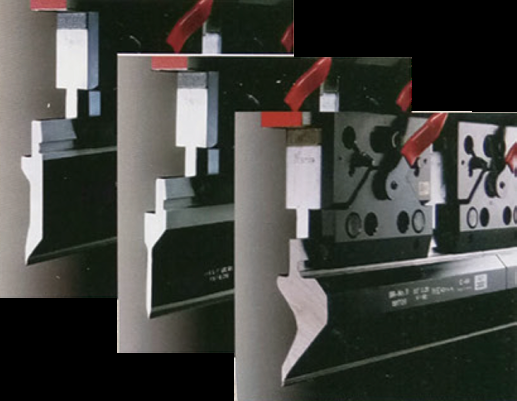
Existing tooling can represent a significant investment. Retaining compatible tools can reduce transition cost, but the new machine should never be configured around unverified tooling assumptions.
Identify the tool style and interface.
Record the punch tang, die base, clamping style, sectional lengths and manufacturer. Similar-looking systems may differ in tang dimensions, load direction, safety features and seating geometry.
Inspect condition and load rating.
Look for cracks, mushrooming, damaged tangs, uneven wear and previous repairs. Confirm the tool load rating against the planned material, bend length and V-opening. Unknown or damaged tooling should not be placed into production without qualified review.
Use engineered adapters and safety clamps.
Machinists Vault can supply application-specific adapters that connect compatible legacy tooling to the selected BENDRYX clamping system. Safety clamps and positive retention help prevent tools from dropping during loading and changeover.
Check the complete formed geometry.
Punch height, gooseneck clearance, die width and shoulder geometry determine whether the part can complete its bend sequence without collision. Deep boxes and return flanges may require alternate profiles even when the first bend is possible.
Create a controlled tooling library.
Once approved, record tool geometry, capacity and sectional lengths in the CNC library. Label physical tools and adapters so operators can reproduce the programmed setup safely.
Discuss tooling with Machinists Vault ↗