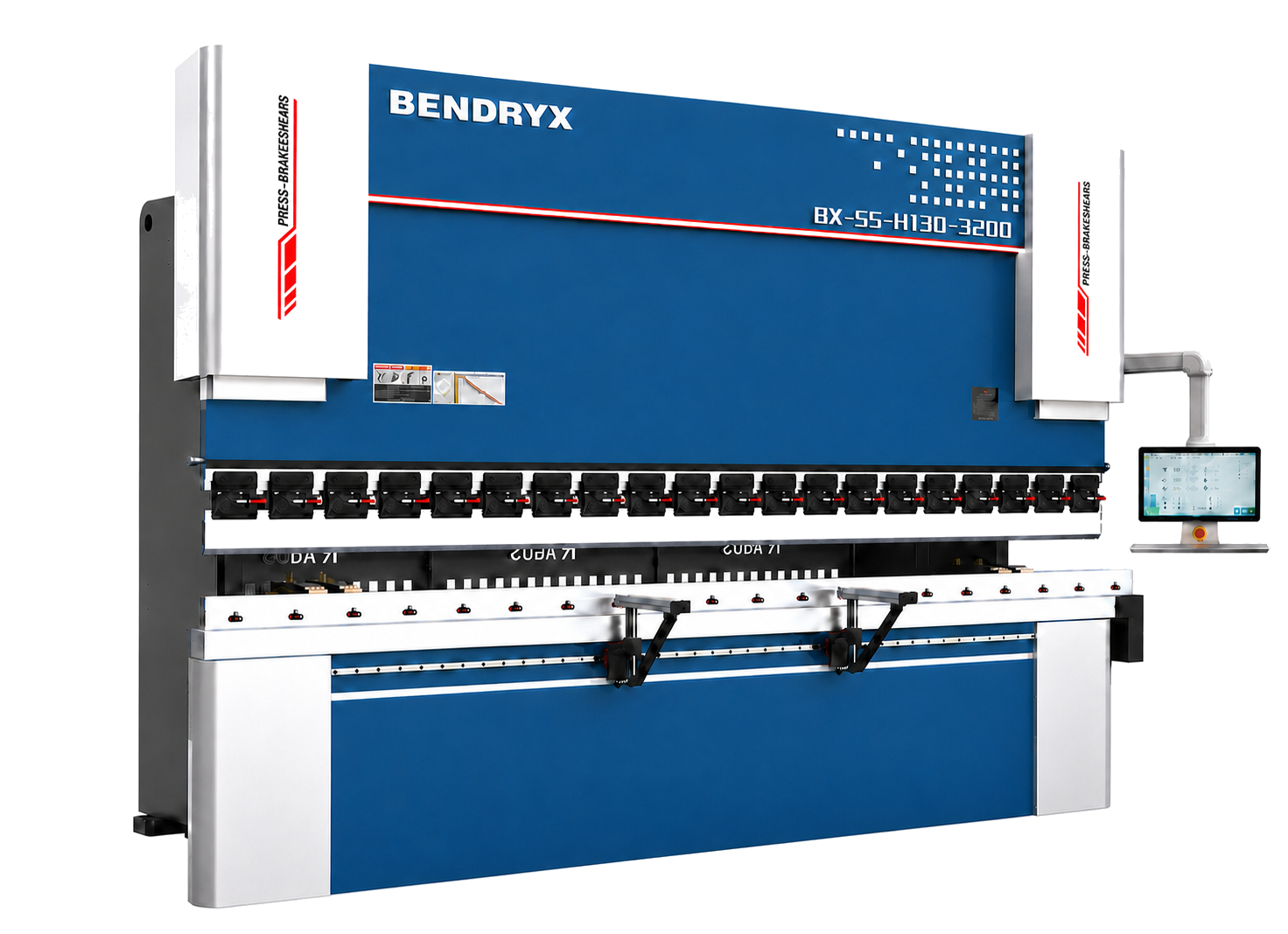
Recommended starting point
BX-SS-H130-3200
Single-servo hybrid is the broad-purpose starting point for mixed daily fabrication and changing part families.
Same capacity. Different production priorities.
AS, SS and DS all provide 130 tons across a 3,200 mm working length. The right choice depends on what you value after capacity: long-bend consistency, broad versatility or production response.
Start with the production outcome
Select the closest priority. This gives you a technical starting point—not an automated approval. Final force, tooling and configuration are confirmed from the part.
Single-servo hybrid is the broad-purpose starting point for mixed daily fabrication and changing part families.
Technical comparison
DS and SS performance values come from their model-specific technical catalogs. AS cycle, oil, weight and envelope remain application-confirmed.
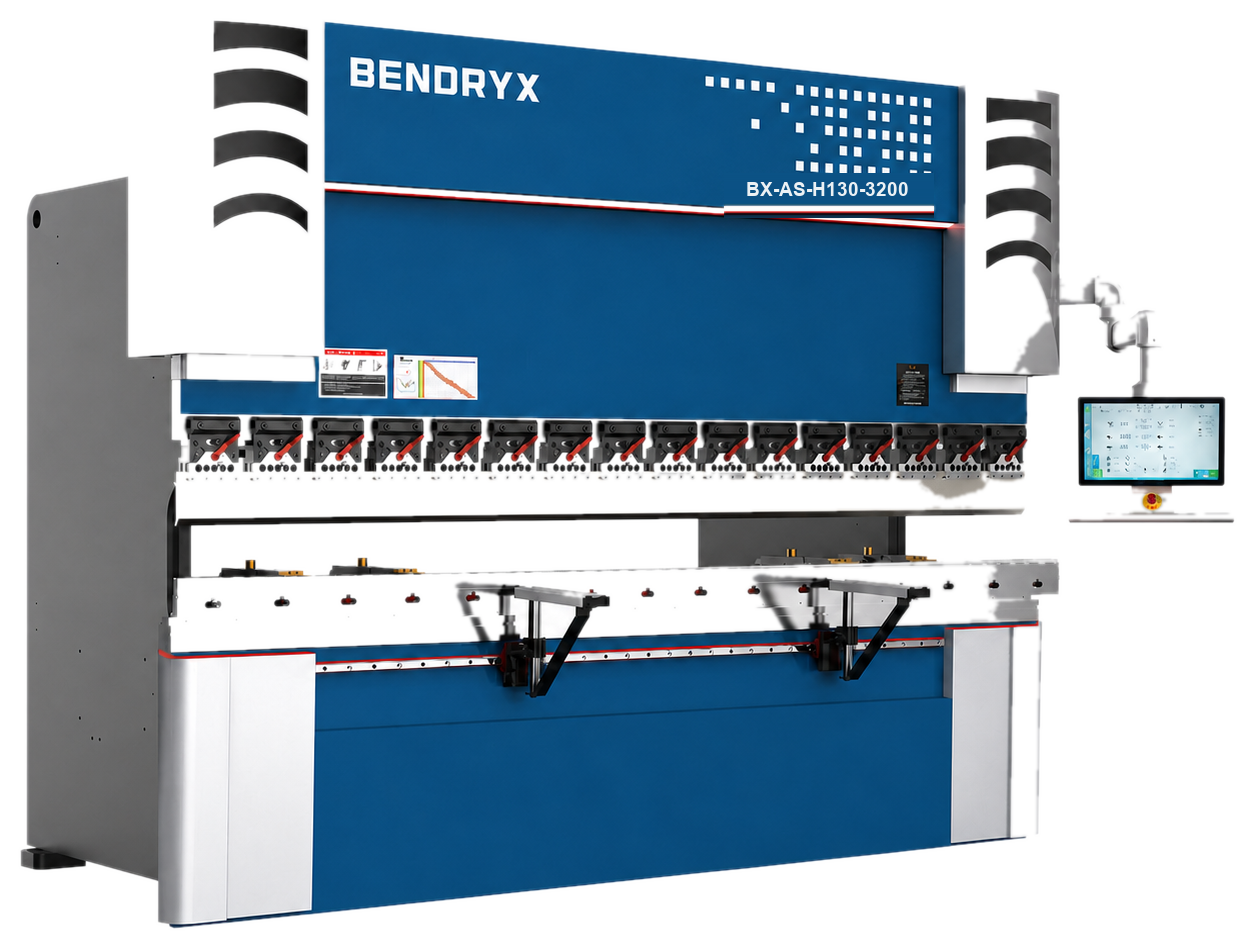
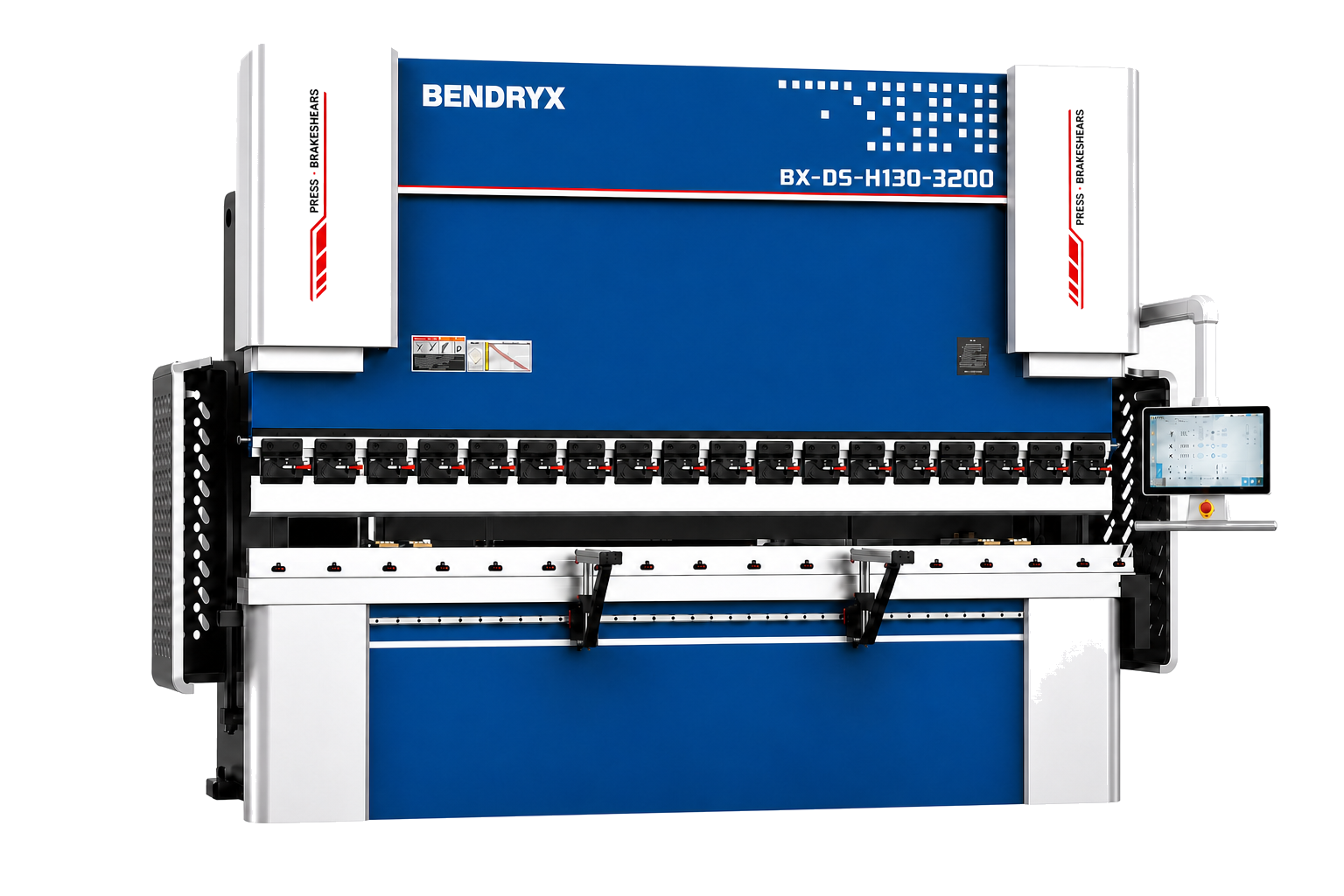
| Decision factor | BX-AS-H130-3200Adaptive Servo Hybrid | BX-SS-H130-3200Single Servo Hybrid | BX-DS-H130-3200Dual Servo Hybrid |
|---|---|---|---|
| Primary reason to choose | Adaptive compensation and long-bend consistency | Broad versatility and practical ownership | Production response and heavy-duty rigidity |
| Nominal force | 130 ton | 130 ton | 130 ton |
| Working length | 3,200 mm | 3,200 mm | 3,200 mm |
| Between columns | 2,700 mm | 2,700 mm | 2,700 mm |
| Stroke / opening | 200 / 500 mm | 200 / 500 mm | 200 / 500 mm |
| Main drive power | 8.8 kW | 10.2 kW | 2 × 7.5 kW |
| Fast approach | Application confirmed | 200 mm/s | 220 mm/s |
| Return speed | Application confirmed | 160 mm/s | 200 mm/s |
| Hydraulic oil | Application confirmed | 170 L | 2 × 60 L |
| Approximate weight | Application confirmed | 7,300 kg | 9,000 kg |
| Rear-gauge direction | 4-axis production positioning | 4+1 standard; up to 8+1 | 4+1 standard; up to 8+1 |
| Recommended package | Production | Production | Advanced |
Capacity is only the first filter
A 130-ton rating does not independently confirm your part. Material tensile strength, bend length, die opening, inside radius, tooling load and flange geometry determine the real application fit.
Send a representative drawing and material specification.
Confirm tooling, tonnage and smallest-flange constraints.
Select CNC, gauge, clamping, safety and handling together.
Document the final machine and acceptance requirements.